
By Shea Dolce
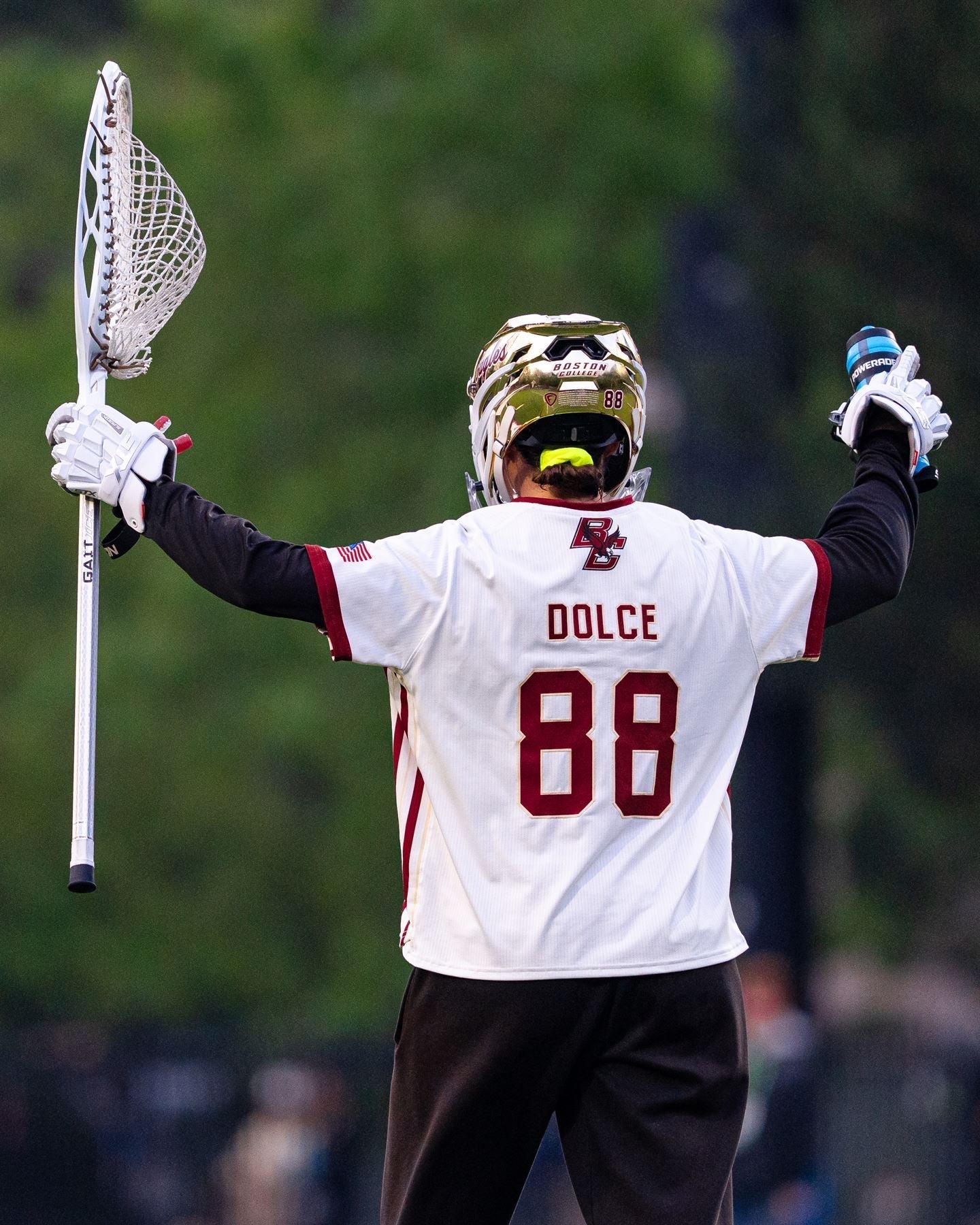
I realized in high school that the goalie position is different in a way that’s hard to explain unless you’ve lived it. You wear different gear. You train differently. You see the field from a completely different lens. While everyone else rotates in and out, you stay. While mistakes at other positions can get hidden in the flow of the game, yours sit on the scoreboard. I started to understand pretty quickly that being a goalie meant accepting a certain level of isolation. You’re constantly communicating, organizing, directing traffic, but when the shot goes up, it’s just you in the cage. It’s a position built on accountability.
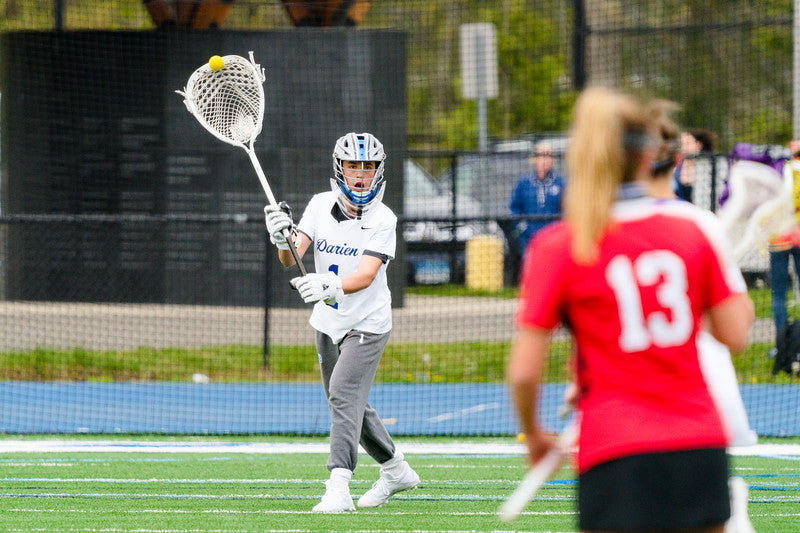
In high school, that isolation actually became something I grew to love. I realized that I liked how the game slowed down in big moments. I liked that the pressure was clear and defined. But I also started to realize how emotionally heavy it could be. When you care deeply, every goal feels very personal. You replay it in your head. You think about your angle, your step, your hands. And at the same time, you have to turn around, grab the ball out of the net, and talk to your defense like nothing rattled you. I learned early that body language is everything. Even if I felt frustrated internally, I couldn’t let my shoulders drop. I couldn’t let my energy dip. My reaction wasn’t just about me, it affected ten other girls. Even then, I was starting to learn that while I couldn’t control every shot, I could always control my response.
College brought that lesson to a completely different level. The speed, the stakes, the expectations, everything intensified. Everything was especially intensified because I came into college fighting for a role. Nothing was handed to me. I knew I had to work for it, and I knew it was not going to be easy. While the other goalie would take four reps, I was constantly trying to make sure my four reps were better. If the coaches were charting percentages, I made sure mine were higher. And if they weren’t, I would overthink it, replay it, analyze it, and try to find ways to be better. I put pressure on myself because I cared so much.
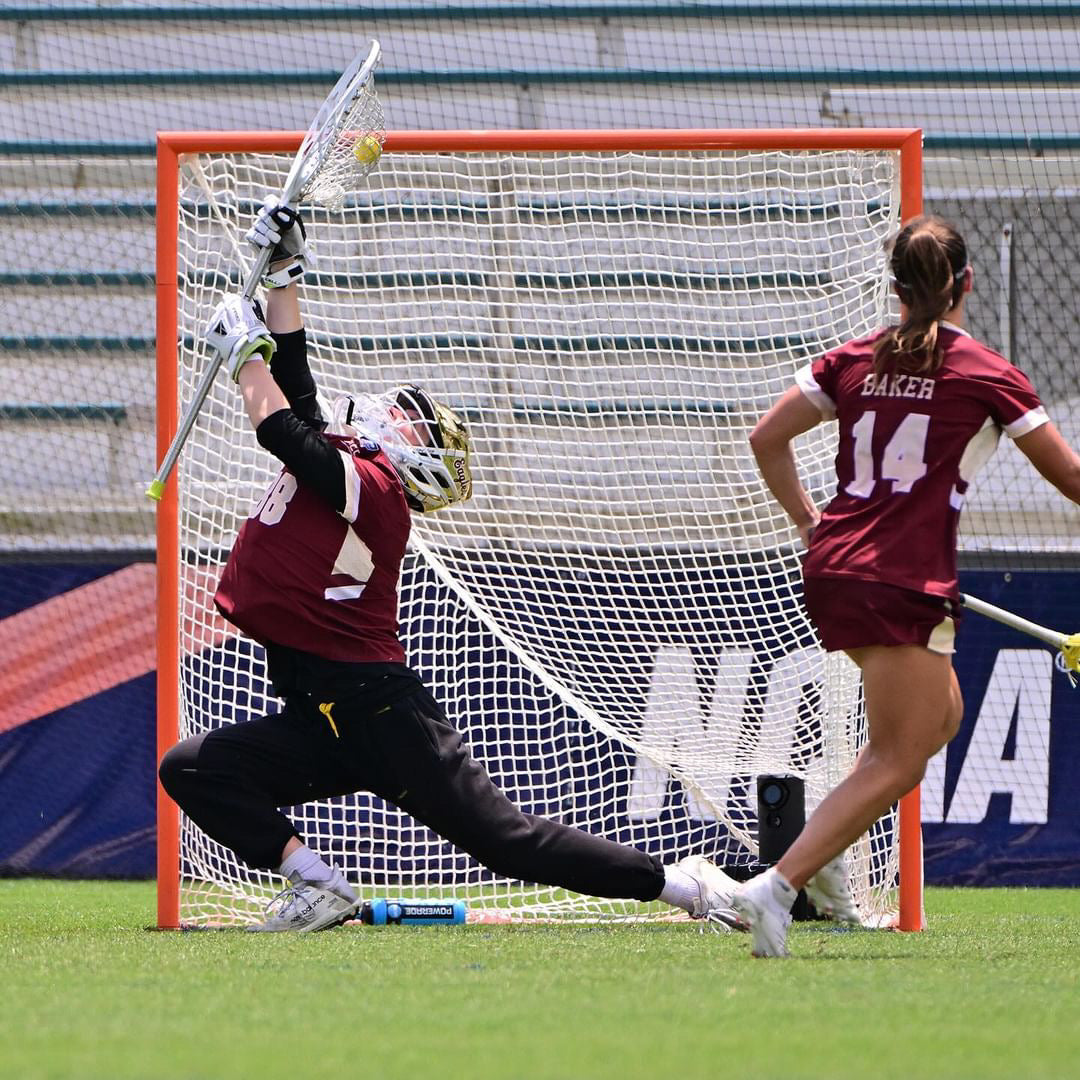
But somewhere in that process, I learned one of the biggest lessons of my career: I couldn’t control everything. I couldn’t control how many reps I got that day. I couldn’t control what the coaches were thinking. I couldn’t control if a shot was tipped or if a defender got beat topside. What I could control was my preparation, my response, my communication, and my effort every single rep. I started shifting my mindset from comparison to ownership. Instead of asking, “Am I getting enough?” I asked, “Am I maximizing what I have?” Instead of spiraling after a mistake, I focused on the next save.
College forced me to truly understand what it means to control the controllables. A prime example of this was in 2024, when I won the national championship my sophomore year. Starting out down by six goals, nothing was going our way. I had made one save, but I wasn’t seeing the ball well. I was hyperventilating because of the heat, and I felt like I was spiraling out of control. In that moment, I had two choices, let the emotion take over, or shrink the game down to what I could control. I remember stepping into the crease, taking one deep breath, and telling myself, just win the next shot. Not the next five minutes. I focused on my hands. I focused on my voice. I started communicating more. I slowed my breathing. And little by little, the game slowed down again. One save turned into two. Two turned into momentum. The scoreboard didn’t flip instantly, but my mindset did. That game taught me that controlling the controllables isn’t just a phrase, it’s leadership and choosing composure when everything in you wants to panic. And ultimately, it’s what allowed me to settle in, trust my preparation, and help my team climb back and win a game that once felt completely out of reach.
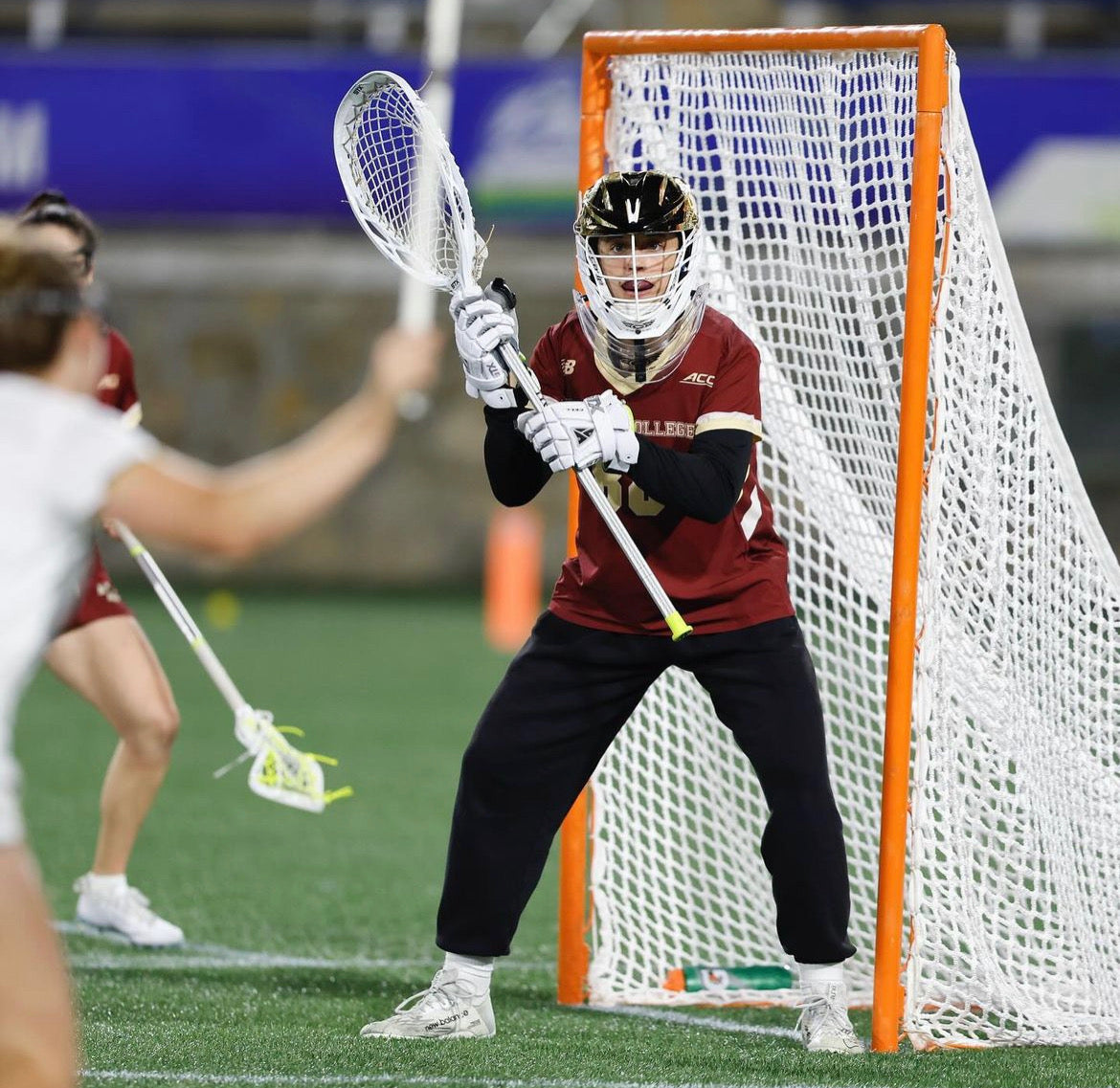
Over the last four years, I have realized just how much emotion lives inside me as a competitor. I don’t just want to win. I feel like I need to win for the people next to me. For my teammates who sprint back on defense. For the coaches who trust me. For the seniors who poured into the program before me. And when you care that much, the emotional swings can be big. The adrenaline after a huge save. The frustration after a garbage goal. In the cage, you experience all of it in real time.
There were moments in college where I could feel how much emotion the position pulled out of me, and I had to learn that being emotional isn’t a weakness. It’s something that takes thought and care. And, at the end of the day, it is in your control. I started to understand that mental toughness isn’t about being robotic or numb to it, it’s about feeling everything and still choosing to be steady, for yourself and especially your teammates. What really came to light for me was how much the team looks at the goalie to set the tone. If I panic, the defense panics. If I’m calm, they settle. If I’m locked in, they play freer. That responsibility forced me to grow up fast. I had to develop a reset button. A “next shot” mindset. I had to learn how to control what I could control, my voice, my posture, my response, even when the things out of my control were loud. And the more I focused on what I could control, the freer I played. The less I worried about the outside noise, the more present I became in the moment.
The goalie position is isolating, yes. But it’s also empowering. You are the backbone of the defense. You see the whole picture. You live in the biggest moments. And as much as it exposes your emotions, it also shapes them. Being a goalie has taught me more about myself than almost anything else, how deeply I care, how competitive I am, and how strong you have to be to stand alone in a cage and still choose to lead. At the end of the day, when everything feels like it’s spiraling out of control, fall back on what you can control because that’s where your individual power lives.