
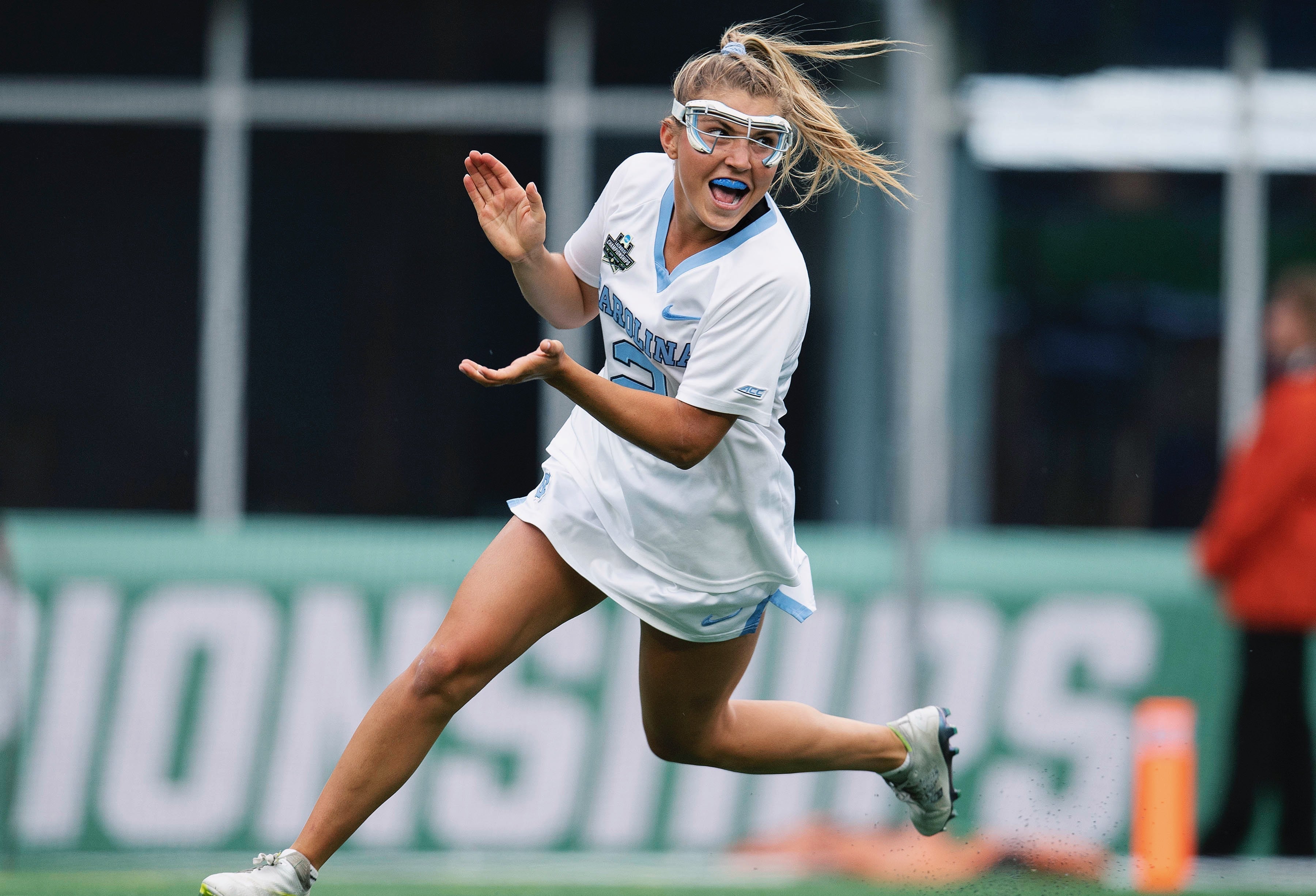
From Darien’s dynasty to Chapel Hill’s next chapter, how a backyard dreamer became the sport’s most intriguing new architect.
In Darien, Connecticut, lacrosse isn’t introduced so much as inherited. It holds the same cultural gravity basketball holds in Indiana and football holds in Texas. For Chloe Humphrey, the youngest of three sisters in one of the sport’s most recognizable families, the game began not under stadium lights or on recruiting circuits, but in the backyard — a laboratory of wall-ball reps, improvised trick shots, and imagination unbounded by instruction.
“I was always just very competitive — no matter what I was doing,” she said. “Everything I did was 100%.” At first, she resisted the path laid by her sisters, Ashley and Nicole. Chloe insisted on soccer, not to defy lacrosse, but to assert something fundamental, young and true: I want to do this my own way. “I was always a little quirky and different,” she said. “I really wanted to create my own path.” In Darien, though, gravity wins. The speed of soccer gave way to the craft of lacrosse; same cleats, new canvas.
Growing up Humphrey meant growing up inside a dynasty framework. Ashley and Nicole were already elite — both creative, competitive, and unafraid of the sport’s more expressive terrain. The Humphreys had a way of making lacrosse look less like a diagram and more like choreography; it wasn’t just possession and tactics, but timing and flair. Still, Chloe was not a carbon copy. She brought something sharper — a spikier competitiveness mixed with an almost restless creative motor. The sisters called it the “backyard mode,” that state where hours bled together, and shots didn’t need to make sense as long as they made something new.

If Darien was the ecosystem, UNC was the horizon. The Humphreys had been on the Tar Heels’ radar long before Chloe imagined college lacrosse; Nicole committed in high school, and the pipeline felt as natural as the backyard itself. Chloe watched UNC’s 2016 national championship on the family TV — she was too young for recruiting conversations, but not too young to imprint. “The moment I fell in love with lacrosse was watching UNC in 2016,” she said. “From that moment, I was going to do whatever it took to play at UNC and be a national champion.”
High school sharpened what began in the backyard. Darien’s schedule didn’t allow for complacency; every practice was a battle with expectation. It wasn’t hype that drove Chloe — it was the work, the obsession. “I was obsessed with lacrosse,” she said. “I loved the creativity, the IQ, the friendships. Practice was the highlight of my day.” When others went home, she went home to the wall and to YouTube trick-shot compilations, trying to make the impossible replicable.
If there was pressure, she refused to feel it as burden. Game days weren’t verdicts but opportunities to reveal what she'd been crafting offstage. “It was a way to showcase the fun and crazy skills I’d do in the backyard,” she said. Where most athletes spend high school trying not to make mistakes, Chloe spent it exploring — shots from low angles, passes with disguise, tempo shifts that shaped the rhythm of possession. It wasn’t rebellion, just possibility.
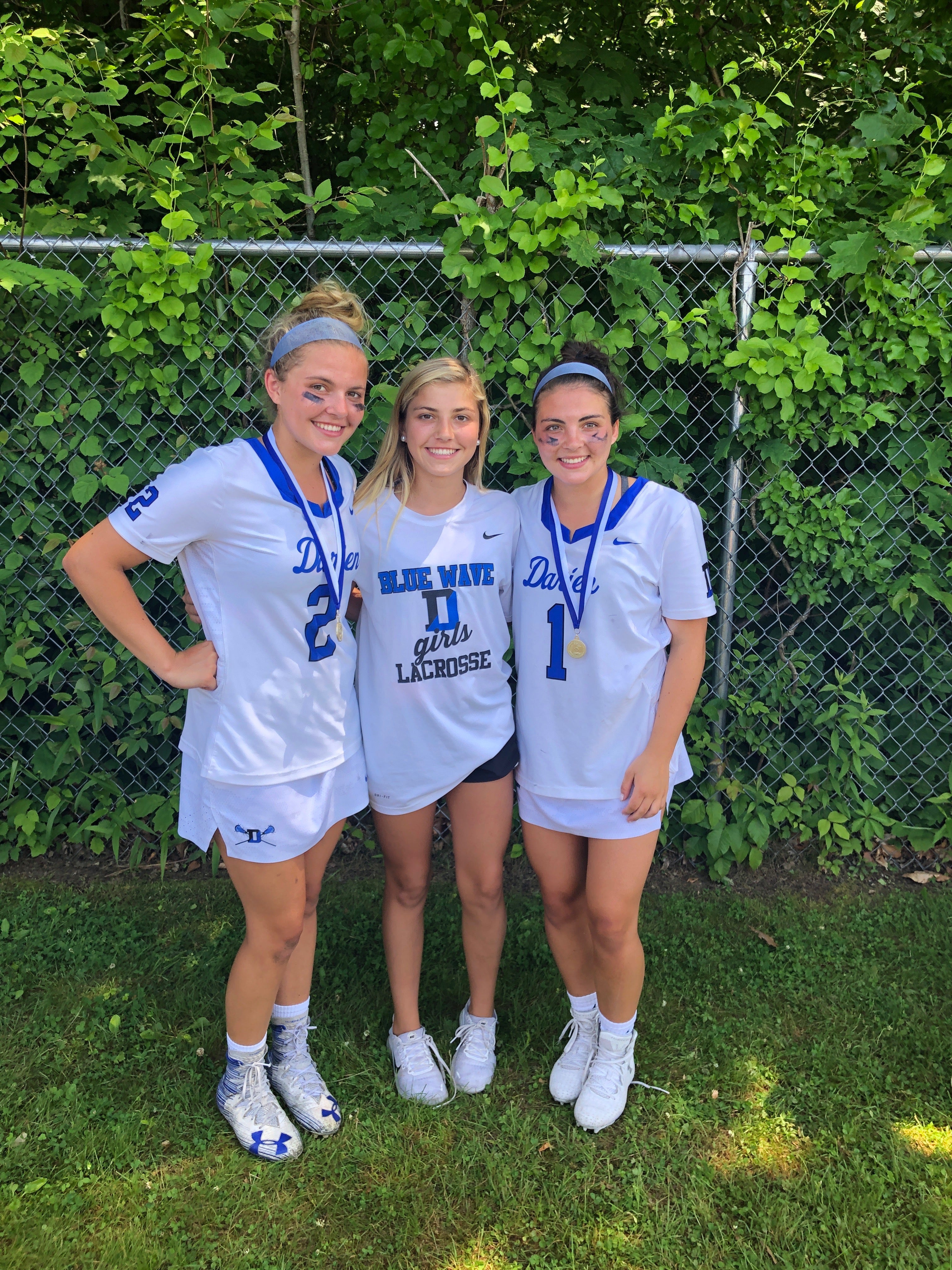
Her high school career hadn’t been linear; injuries had interrupted the ascent and forced her to recalibrate. But senior year she returned healthy, dominant, and unambiguously the best player in the country. Darien went undefeated. She was named national player of the year. It was the kind of season that cements narrative: the backyard prodigy grows up, the pipeline holds, the trajectory is smooth.
College had different plans.
UNC was supposed to be the place where imagination met scale — the arena where youthful invention matured into collegiate assertion. Instead, Chloe’s first year became a study in absence. A foot injury that had been discomfort turned serious, then ominous. For months it teased uncertainty. Then came clarity — and a devastating blow.
“My freshman year, I was told I was never going to play again.”
“Everything just put into perspective,” she said. “To be told that I wouldn’t be able to play — it was devastating.” Worse, it was her first season. She’d put in the work, earned the trust, invested in a fall that promised spring, and then spring evaporated.
“This injury really stripped me of my identity,” she said. “I struggled mentally. I had to ask for help.” She began journaling — not because journaling was part of her personality, but because coping demanded structure. “I had to figure out who I am as Chloe off the lacrosse field. That was something I’d never had to do before.”
Redshirting wasn’t just paperwork; it became a classroom. If she couldn’t shape the field physically, she studied it psychologically. She learned how elite lacrosse operates: pace, spacing, substitutions, and the decisions that shape a game. She became a celebrator, a connector, the sideline’s emotional current. “I never let a tough day affect my energy at practice,” she said. “I always wanted to be the positive light, even though I was going through hell.”
Her teammates carried what she couldn’t. “When I’m struggling, I tend to isolate,” she said. Brooklyn Walker-Welch and Kaleigh Harden refused to let her. Brooklyn, in particular, became a kind of anchor-in-the-storm friendship — sharpened by parallel injury, sustained by shared disappointment. “That friendship wouldn’t have strengthened the way it did without our injuries,” she said. Redshirt year became the trio's strange gift — not the season they wanted, but the season that rewrote how they understood support.

But injury isn’t static. The U20 cycle arrived, and with it the chance to represent the United States — a dream both sacred and visible. Coming off a freshman season lost to injury, she didn’t have the runway to make a real case. The roster she was left off traveled to Hong Kong and won gold. Chloe watched from a distance — not bitter, not broken, but sharpened. “I remember sitting in my gym just feeling so much,” she said. The disappointment didn’t force a decision; it crystallized one.
She stopped thinking about working harder — everyone at that level works hard — and started thinking about working smarter. “My doctor told me, ‘Work smarter, not harder,’” she said. The phrase stuck. Load management replaced martyrdom. Low-impact workouts replaced miles upon miles. Diet approached purpose. “I needed to show my body that it was loved and cared for,” she said. “Not just something I could run into the ground.”
While the injury revealed identity’s fragility, it also revealed something else: imagination doesn’t disappear when the body slows. It waits. The version of Chloe who returned in 2025 was not the backyard prodigy scaled up, nor the high school phenom extended. She was more precise, more intentional, more aware of the game’s architecture and her place within it.
“The worst availability is no availability,” she said, echoing a Jenny Levy principle. If the backyard had been about freedom and play, and high school had been about expression and dominance, college became about stewardship — of energy, of body, of timing. It wasn’t maturity for maturity’s sake; it was survival, and then expansion.
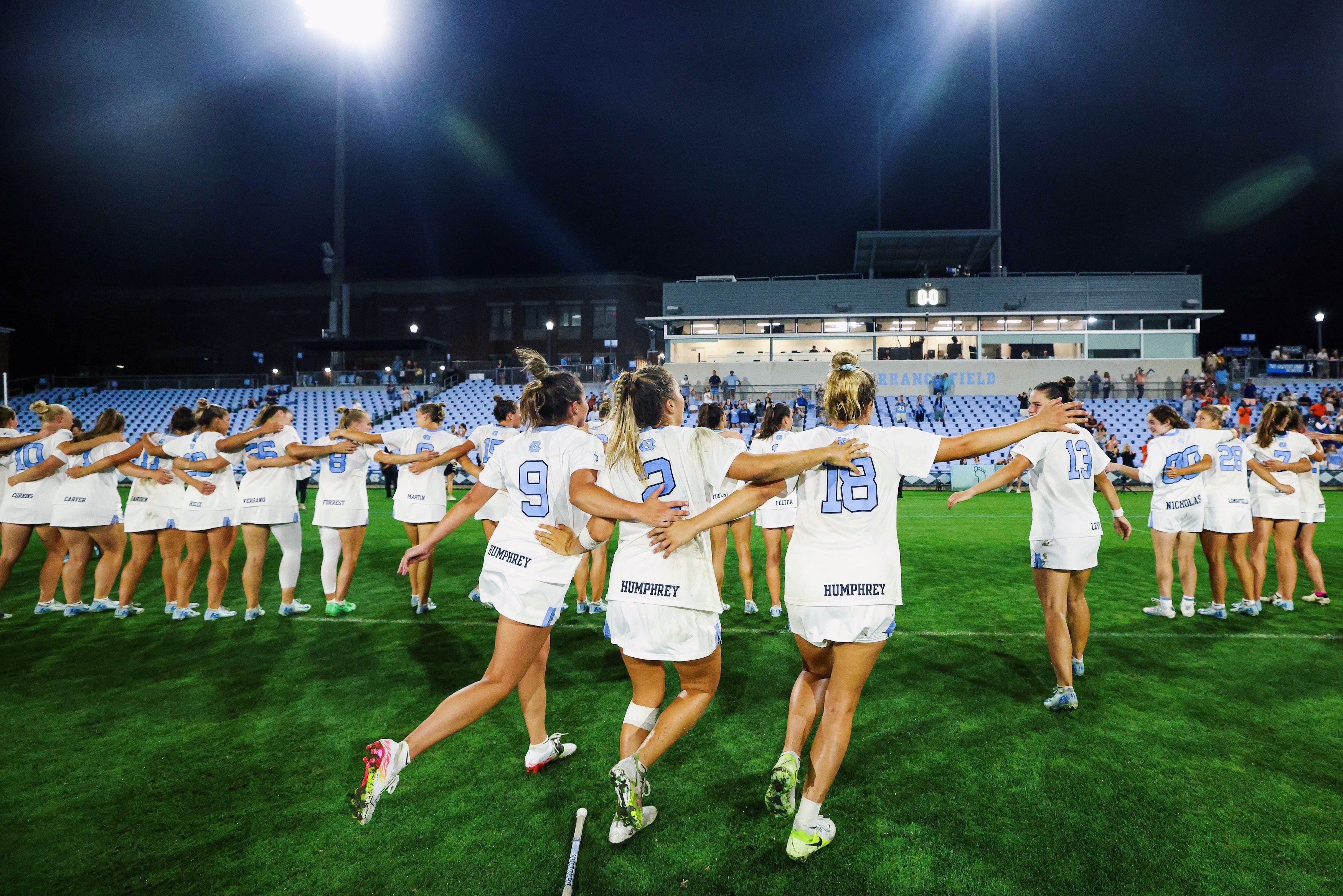
That season, the Humphrey constellation aligned in a way that felt scripted. For the first and only time, all three sisters — Ashley, Nicole, and Chloe — wore UNC together. Not in camp gear, not in summer tournament jerseys, but in the navy and Carolina blue that had defined a generation of the sport. Transfers, pandemic cancellations, and redshirts — the strange math of modern college athletics — made it possible. That it resulted in a national championship made it fairy-tale.
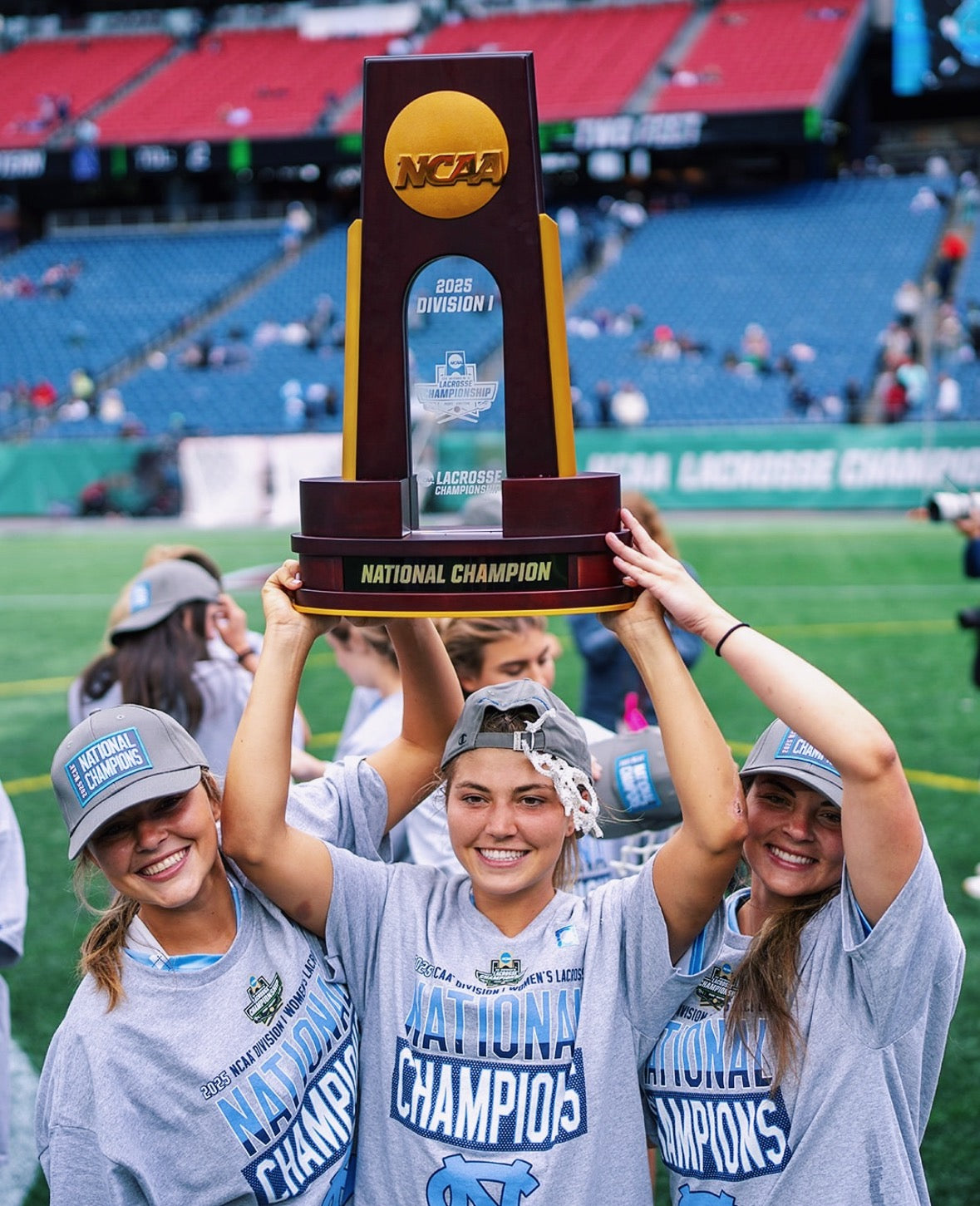
If the trophy was the event, 2025 was the thesis. The Tewaaraton and the accolades didn’t feel like arrival or validation — Chloe almost recoiled at that framing, laughing. “If you told me before the season that I’d win any of those awards, I would have told you [that] you were insane,” she said. For her, the awards didn’t certify talent; they certified timing. “Everything happens for a reason,” she said, not as cliché but as working ideology. “Every bad practice, every mistake, every injury — you’re always learning.”
The redshirt year taught her that progress isn’t always visible: sometimes it looks like waiting, questioning, recalibrating. High school taught her dominance; injury taught her durability. Together they produced something that felt less like inevitability and more like authorship. The highlights that circulated after the season — the disguises, the angles, the balance, the delay steps that froze defenders — were not tricks so much as literacy. She had always been creative; now she had perspective to match.
Where so many young stars measure progress through spotlight, Chloe measures through footprint. Her compass is relational, not transactional. The little girls waiting in line for signatures after games matter, not because they affirm fame, but because they affirm inheritance — the sense that the sport doesn’t just move forward, it expands. “I always imagine those little girls,” she said. “Why did I start playing? Why do I keep doing this? What is the point of all this?”

Women’s lacrosse has entered an era of cultural acceleration — NIL visibility, professional infrastructure, and Olympic recognition have pushed the sport into a different kind of relevance. Players like Chloe don’t just perform the sport; they represent it. They are both participant and platform in a moment when representation shapes momentum. For Chloe, social presence isn’t vanity; it’s stewardship. “My goal is to spread the sport of lacrosse,” she said. “A lot of people don’t even know what lacrosse is.” It’s not complaint; it’s invitation.
The Olympics loom as horizon. Los Angeles 2028 feels close enough to imagine but far enough to demand labor. “I could only dream of being part of that Olympic roster,” she said. Dreaming, for Chloe, isn’t passive. It’s directional. “I’m going to work the hardest I ever have to hopefully be named on that roster and bring back a gold medal.” The sentence lands without theatrics — matter-of-fact, the way someone discusses things that feel both improbable and non-negotiable.
None of this was guaranteed the day a doctor suggested she might never play again. Nothing about that moment suggested national titles or Tewaaratons or Olympic aspiration. Injury has a way of putting the game — and the ego — with a kind of clarity that only distance affords. “I’d be lying if I said I wasn’t down most days,” she said. Watching practice became a form of exposure therapy: the game continued without her, and she was expected to love it anyway.
The teammates made loving it possible. They didn’t fix the injury or the identity crisis, but they built scaffolding around it — dinners, jokes, adventures, distractions masquerading as normalcy. “We just had so much fun,” she said. “We never took a moment for granted.” When performance expectations collapsed, friendship filled the space.
As she healed, the question was never if she’d play again — not to Chloe — but who she would be when she did. Injury changes the body, but it changes the consciousness more. It makes the familiar strange again. It reintroduces the sport with new stakes. The backyard teaches joy; the injury teaches cost. The combination teaches purpose.
Redshirt 2024 wasn’t redemptive — it was preparatory. U20 wasn’t a setback — it was diagnostic. Together they made 2025 clear. Without them, dominance would have looked simple. With them, it looked earned.
Ask Chloe what she hopes her story represents, and she doesn’t talk about titles or trophies or rankings. She talks about recognition — not of achievement, but of struggle. “A lot of people have seen the highlights of this year,” she said, “but they have no idea the misery, disappointment, and frustration of 2024.” Not bitterness — context. She isn’t interested in being understood as an exception; she’s interested in being understood as evidence. “Every athlete deals with setbacks,” she said. “Whether you’re at the top of the pyramid or the bottom.”
To the injured athlete — the one scrolling rehab videos, bargaining with timelines, falling asleep with fear — she offers no shortcuts. No sermon about attitude or toughness. Just process. “Everything gets better,” she said. “Trust the process. Trust every day of recovery. Even when you feel like you’re not making progress, you are.” She learned to track gratitude: five things in a journal, even on days when gratitude felt like deceit. “You learn to find the beauty in life outside of lacrosse,” she said. “To remember that we’re healthy, we have loving families, the best friends. That matters.”
UNC now sits at the center of her present, but not at the edge of her ambition. The next three years in Chapel Hill feel less like time to fill and more like chapters to write. “Obviously the goal is to win three more national championships,” she said, with a clarity that makes the absurd sound rational. Inevitable, even. But the horizon stretches farther. The Olympics, the growth of the women’s game, and the responsibility of visibility all pull at her with a future-facing gravity. “I want to increase my social media presence to bring more eyes to lacrosse,” she said. It isn’t about influencing — it’s about amplifying the sport. And women’s lacrosse is finally entering a moment that feels built for it.

Eventually, the sport will hand her back to the world. When it does, she’ll take her business degree from Kenan-Flagler and go do what people with discipline and perspective do — something that demands both. Finance is the current answer, but the timeline may shift. There is a universe in which she becomes a professional athlete in the WLL; another in which she does that and builds the sport’s infrastructure around her; another in which she returns to the backyard not to create, but to teach.
For now, she exists in a rare athletic state: known but still forming. Established, but not finished. Visible, but not final. The youngest Humphrey has already extended the family’s mythology — the talent pipeline, the creativity, the competitiveness, the Carolina blue — but she has also made it unmistakably her own. When young girls in Fairfield County imagine what the sport can look like, they imagine the Humphreys. When UNC imagines what the next three years can hold, it imagines Chloe.
Backyard to dynasty. Dynasty to injury. Injury to authorship. Authorship to horizon.
When she was younger, she didn’t dream of being exceptional; she dreamed of being there — in uniform, on the field, holding a trophy that once lived only in imagination. She reenacted it in the grass with stick, ball and bounce back, staging the moment for no audience but her family.
Years later, in a stadium with cameras and confetti and context, she held the real thing. The origin story and the present tense collapsed into each other — the backyard and the championship indistinguishable for one suspended instant.
Imagination, it turned out, wasn’t the prelude.
It was the blueprint.